
Do Titanium Cutting Boards Really Blunt Knives?
By Rachel Owens | Last Updated: January 15, 2026
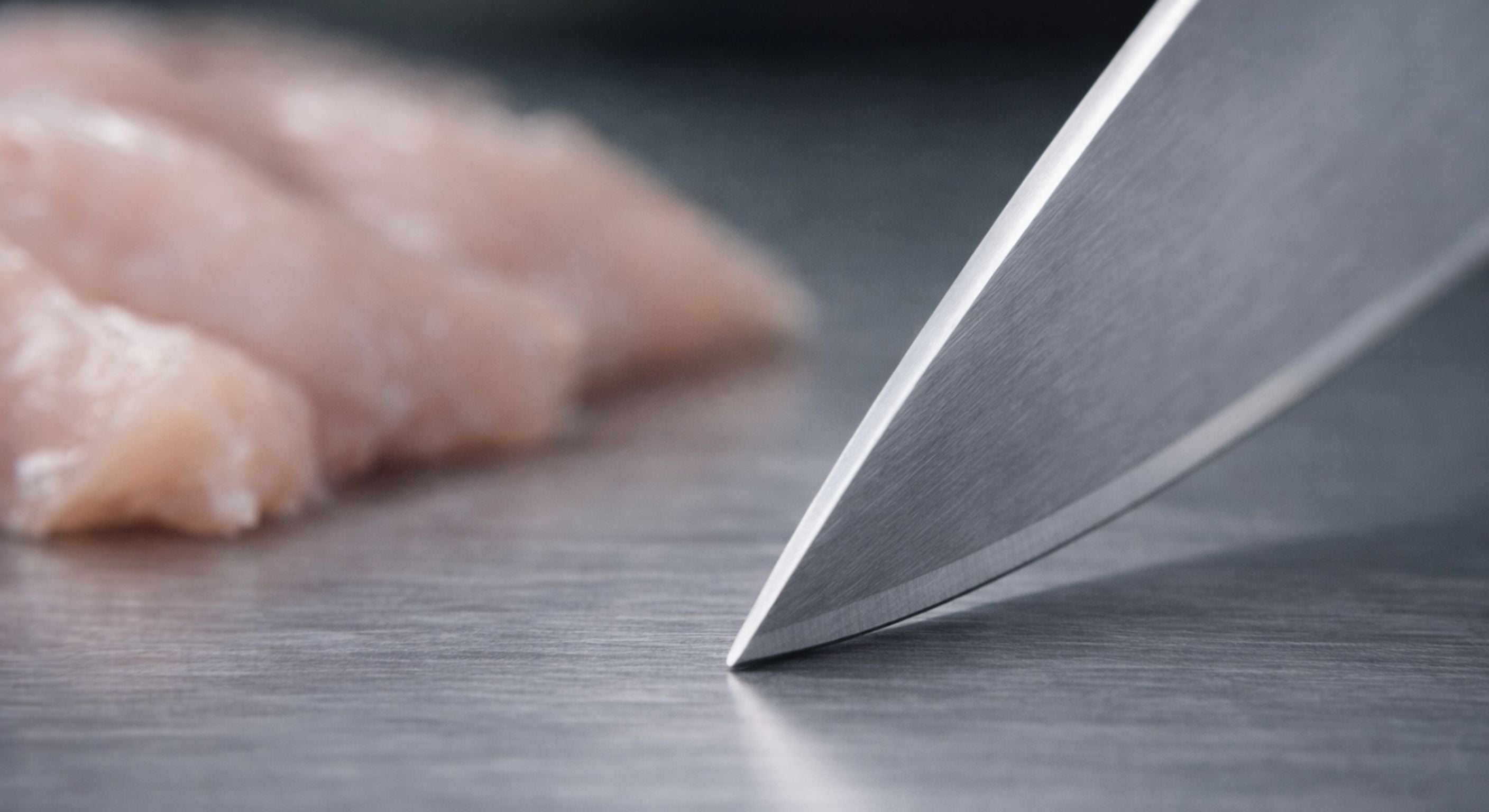
Titanium cutting boards are often misunderstood.
One of the most common concerns we hear is simple and fair:
“Won’t a metal cutting board ruin my knives?”
The short answer is no. And the long answer is worth understanding.
This page explains exactly how knife edges work, what actually causes knives to go dull, and why a properly engineered titanium cutting board behaves very differently from what most people expect.
What Actually Dulls a Knife?
A knife doesn’t go dull because it “hits something hard.”
It goes dull because the fine edge bends, rolls, or chips over time.
At a microscopic level, a sharp knife edge is incredibly thin. When you cut, the edge experiences lateral force. If the surface underneath causes the edge to catch, twist, or grab, that edge deforms faster.

The biggest contributors to knife dulling are:
Edge rolling from uneven resistance
Micro-chipping caused by brittle contact
Excess friction that drags the blade instead of letting it glide
This is why knives dull quickly on:
Glass boards
Stone or marble
Ceramic surfaces
These materials are rigid, brittle, and unforgiving.
Why Titanium Is Different From “Metal”
Not all metals have the same properties.
Titanium is not like steel, aluminum, or cast iron.
It has a unique combination of properties that make it fundamentally different as a cutting surface.
Titanium is strong, but not brittle. Slightly elastic under pressure, non-porous and uniform, and naturally smooth at a microscopic level
When a knife edge meets a titanium board, the surface does not chip or crack the edge. Instead, it provides consistent resistance, allowing the blade to slide cleanly without snagging.
In simple terms:
The knife cuts the food, not the board.
Hardness vs. Behavior (The Key Detail Most People Miss)
Many people assume hardness alone determines knife damage. That’s a misunderstanding.
What matters is how a surface behaves under impact.
Glass and stone are extremely hard, but they are also brittle. When a knife hits them, the energy goes back into the blade edge, causing chipping.
Wood and plastic are softer, but they introduce other problems:
Wood absorbs moisture and bacteria
Plastic creates micro-grooves that trap debris
Both create uneven resistance as they degrade

Titanium sits in a unique middle ground:
Hard enough to stay perfectly flat
Stable enough not to flex unevenly
Smooth enough not to grab the edge
Tough enough to absorb micro-impact without fracturing
This is why titanium is widely used in surgical instruments, medical implants, and aerospace applications where edge integrity matters.
Independent Testing & Real-World Use
In controlled kitchen tests, titanium cutting boards show no accelerated knife dulling compared to premium hardwood boards when used correctly.
In many cases, chefs report: Less edge rolling over time, More consistent cutting feel, and Reduced need for frequent honing
Why? Because the blade experiences predictable, uniform resistance on every cut.
There are no deep grooves, no soft spots, and no warped areas that twist the blade.
What About Sound and Feel?
Another concern people raise is the “metal on metal” fear.
In reality:
Titanium produces a muted, solid sound, not a sharp clack
The cutting feel is controlled and deliberate
There is no slipping, bouncing, or skating
Most users describe the experience as:
“Firm, clean, and precise.”
The Hidden Knife Killer: Plastic Boards
Ironically, plastic cutting boards are often worse for knives long-term.
As plastic wears down, it develops microscopic trenches. These grooves cause blades to catch and torque during cuts, which leads to faster edge fatigue.
Plastic also:
Releases microplastics into food
Retains odors and bacteria
Warps over time, creating uneven cutting angles
Titanium remains perfectly flat and non-porous for life.
Why Professional Kitchens Are Switching
More chefs and health-conscious home cooks are moving toward titanium boards because they solve multiple problems at once:
No knife damage
No bacteria absorption
No microplastics
No warping or cracking
No replacement cycle
One board. Lifetime use.
The Bottom Line
Titanium cutting boards do not blunt knives.
Poorly designed surfaces do.
When engineered correctly, titanium provides a stable, smooth, knife-safe surface that protects blade edges while offering unmatched hygiene and durability.
Clean cuts. Sharp knives. No compromises.
Customer Reviews

01/11/2025
Sheila Marks Verified Buyer
"I love it. It’s so easy to clean and I don’t worry about food poisoning or damage to my knives."
01/12/2025
Peter Rose Verified Buyer
"As advertised. They are also beautiful to look at, easy to clean and( so far) have not blunted any knives."
04/01/2026
TWBelton Verified Buyer
"Best purchase ever for the kitchen in using for cutting meats vegetables etc. Never again using wood or plastic cutting boards."
Frequently Asked Questions
No — titanium is softer than steel, meaning it’s gentle on knife edges while still durable enough to last a lifetime.
Yes. Unlike wood and plastic, titanium is non-porous, so it won’t trap juices, bacteria, or mold. It provides a cleaner, safer surface every time you prepare food.
Simply wipe it down with a cloth, rinse under water, or place it directly in the dishwasher. It cleans in seconds and dries quickly.
No. Titanium is naturally odor- and stain-resistant. Strong smells like garlic, onion, or fish wash away completely.
For life. Titanium won’t crack, warp, or wear down.
Absolutely. From raw meat and fish to fresh vegetables and fruit, titanium is a safe, hygienic surface for any ingredient.
Information on this site is for general purposes only and not professional, medical, or safety advice. Evaluations and rankings are based on independent testing conducted in Q4 2025 under controlled conditions; real-world results may vary.
This site may include affiliate links, which may generate compensation at no extra cost to users and do not affect product rankings. Testimonials and examples are illustrative only. Purchase decisions are the user’s responsibility.
© 2026 Kitchen Labs. Independent testing conducted Q4 2025.